
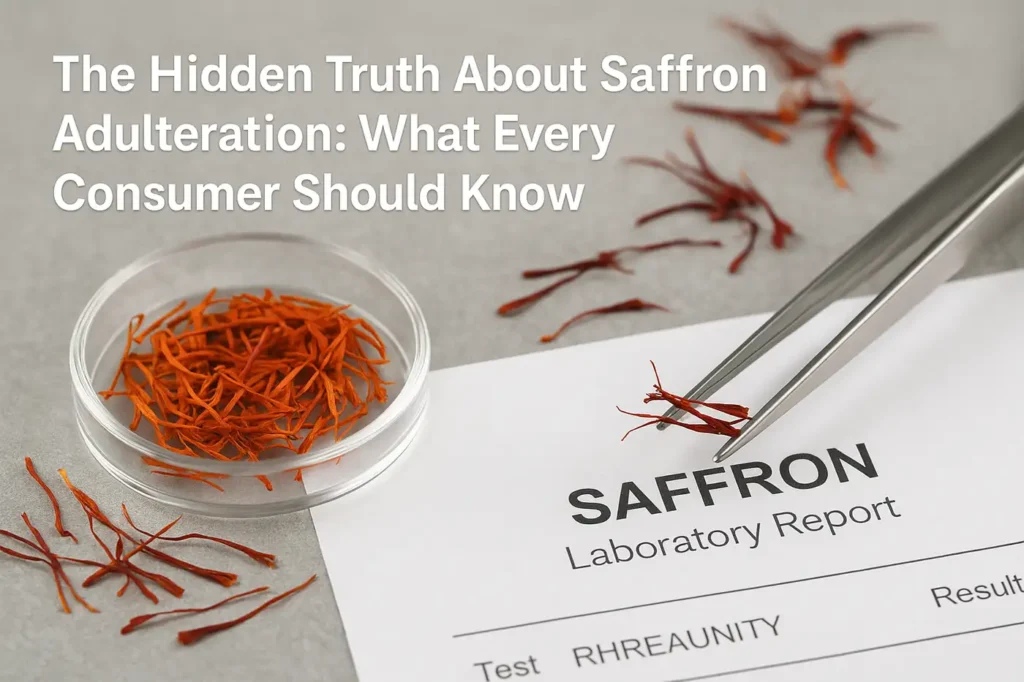
Saffron is celebrated as the world’s most precious spice, yet it is also one of the most commonly adulterated. Because genuine saffron requires hand-harvesting thousands of flowers for a single gram, its high value creates strong incentives for dilution, substitution, or complete fraud. As saffron becomes more popular in gourmet cuisine, wellness products, and luxury confectionery, understanding Saffron adulteration is essential for anyone who values saffron authenticity and safety.
Why Saffron Is Frequently Adulterated
High Price and High Temptation
Proper saffron comes from the stigmas of Crocus sativus, collected during a short flowering season. Its high cost motivates some suppliers to stretch profit margins through adulteration.
Visual Substitution Is Easy
Saffron’s red, delicate, thread-like shape can be imitated by many dyed plant materials that look convincing but are completely fake.
Weak Global Traceability
Bulk saffron often passes through multiple traders before reaching a brand or retailer. Without lab verification and transparent documentation, authenticity becomes nearly impossible to guarantee.
Common Types of Saffron Adulteration
Plant-Based Substitutions
Fraudsters commonly replace or mix real saffron with materials such as dyed corn silk, safflower, hibiscus threads, coconut fibres, or coloured maize filaments. These have no aroma, no flavour, and no health value.
Artificial Dyeing
Low-grade or exhausted saffron is often dyed with banned synthetic colourants like Sudan dyes, or soaked in food dye solutions to deepen the red colour. Some of these dyes pose serious health risks.
Moisture and Weight Manipulation
Threads may be artificially moistened or coated with sugar syrup, oils, or salt to increase weight. This reduces purity and accelerates spoilage.
Powdered Saffron Adulteration
Powder is the easiest form to manipulate. It is frequently mixed with turmeric, paprika, safflower powder, or synthetic colours. Powdered saffron should only be purchased with strong certification.
How Adulteration Affects Consumers
Reduced potency and flavour
Adulterated saffron lacks the true balance of aroma, bitterness, and colour release.
Loss of health benefits
Genuine saffron contains crocin, picrocrocin, and safranal, compounds associated with its culinary and wellness properties. Fake saffron offers none of these benefits.
Possible health risks
Industrial dyes such as Sudan I–IV are illegal for food use in the UK and EU due to toxicity concerns.
How to Identify Real Saffron
The Cold Water Test
Real saffron releases colour slowly, turning water a natural golden yellow. Fake saffron dyes the water bright red immediately.
Aroma Profile
Authentic saffron carries a honey-like, floral, slightly metallic aroma. It should never smell sweet or artificial.
Thread Structure
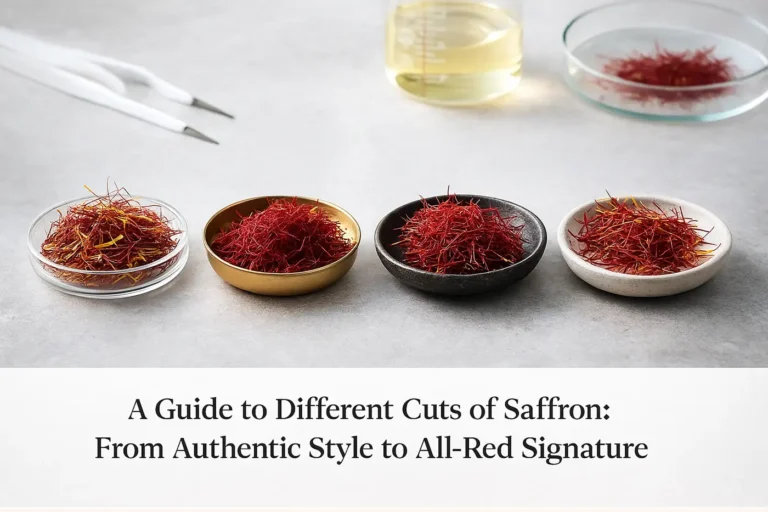
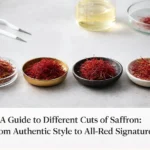
Real saffron threads are trumpet-shaped and wider at one end. Fake threads tend to be uniform, straight, or needle-like.
Taste
Real saffron is bitter, never sweet.
Why Laboratory Verification Matters
Laboratory analysis is the only reliable method to confirm authenticity. High-quality saffron testing includes crocin (colour strength), picrocrocin (flavour), safranal (aroma), moisture level, and ISO 3632 purity categorisation. Brands that publish these results offer a level of transparency far beyond standard market practice.
How Three Stigmas Ensures Authenticity
Every batch at Three Stigmas undergoes independent laboratory testing. We verify the key purity markers, moisture content, and overall quality according to the latest standards. Each batch is assigned a unique ID linked to a QR code, giving customers instant access to the Certificate of Analysis and chain-of-custody information. This ensures that every customer receives genuine, unadulterated, premium saffron with full transparency.
References & Authoritative Sources
ISO 3632:2011 / ISO 3632:2023 – International standard for saffron quality and purity.
European Food Safety Authority (EFSA) – Reports on spice adulteration and food dye safety.
FAO/WHO Codex Alimentarius – International food standards and guidelines.
UK Food Standards Agency (FSA) – Guidance on food authenticity and fraud.
Journal of Agricultural and Food Chemistry – Peer-reviewed research on saffron adulteration detection.